
By Lottie Lawrence, Project Coordinator

Our Marine Energy Engagement Plan (MEEP) work has continued with communities, stakeholders and sector partners across Wales to explore marine renewable energy developments in Pembrokeshire and wider Wales. Our 2025/26 project ‘Marine Energy and Nature Interface Engagement and Pilot Programme’ funded by the Welsh Government, set out to improve understanding of how marine renewable energy developments can coexist with marine habitats and Marine Protected Areas (MPAs), while supporting open, informed dialogue between communities, developers and the environmental sector.
Through interviews, surveys, workshops and a series of pilot events, we explored how people want to engage with these topics, and what helps build trust and confidence. A consistent message emerged: engagement needs to be early, honest, accessible and rooted in local context to be effective.
A key part of the project was testing these ideas in practice through three pilot engagement events across Wales. Here’s a look at what we did, and what we learned.
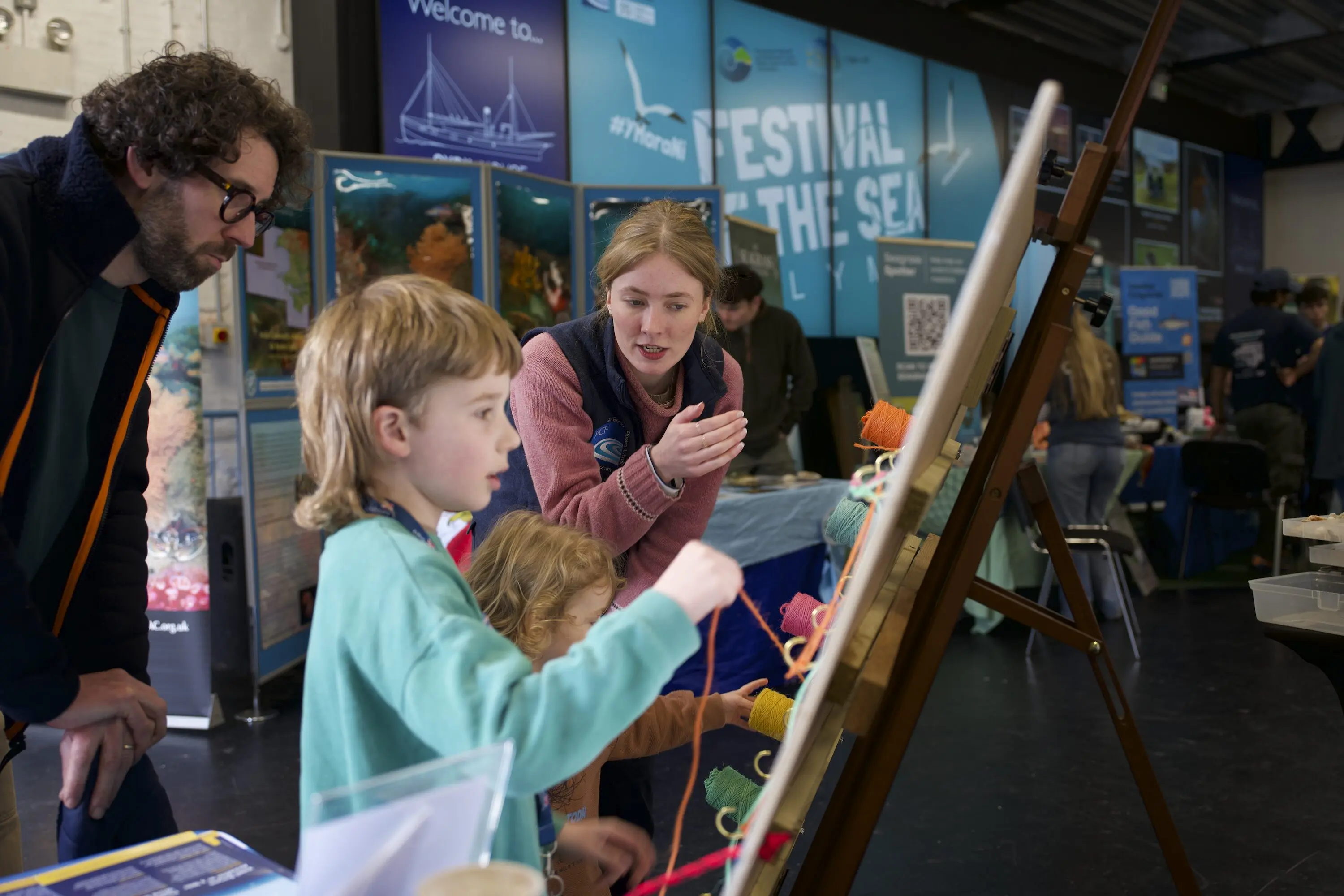
Community Conversations at Festival of the Sea – Southwest Wales
With over 380 attendees, Festival of the Sea provided a broad public audience and a great opportunity for us to explore public understanding of marine renewable energy and MPAs at our MEEP information stand. Our engagement was focused around the use of an interactive engagement board where visitors were invited to share their views and self-assess their knowledge, using this as a starting point for discussion with our team and sector experts.
What we saw:
- Strong interest in marine renewable energy and its potential benefits
- More varied understanding of MPAs and how developments interact with them
What worked well:
- Interactive tools helped break down barriers and start conversations
- Informal, drop-in engagement encouraged participation from people who might not attend dedicated events
- Having experts on hand supported deeper, more personalised discussions
Key takeaway:
Community events create valuable opportunities for informal, curiosity-led engagement, especially when supported by interactive tools, open conversation and expert knowledge.

Drop-In Community Engagement at M-Sparc – North Wales
In North Wales, we trialled a relaxed drop-in event at M-Sparc in partnership with Menter Môn and officers from Pen Llŷn ar Sarnau SAC. The aim of this event was to make engagement easy, accessible and led by the people attending.
Visitors could stop by for a coffee, explore information at their own pace, and talk directly with experts about marine energy projects like the Morlais tidal stream site.
What we saw:
- All attendees reported increased knowledge about marine energy and MPAs
- Confidence in discussing these topics also improved across the group
What worked well:
- Informal, drop-in style reduced barriers to participation
- Expert presence allowed for detailed, tailored conversations
- Bilingual delivery reflected local needs and improved accessibility
Key takeaway:
Taking engagement into everyday spaces, and allowing people to engage on their own terms, can be highly effective in building understanding and confidence.
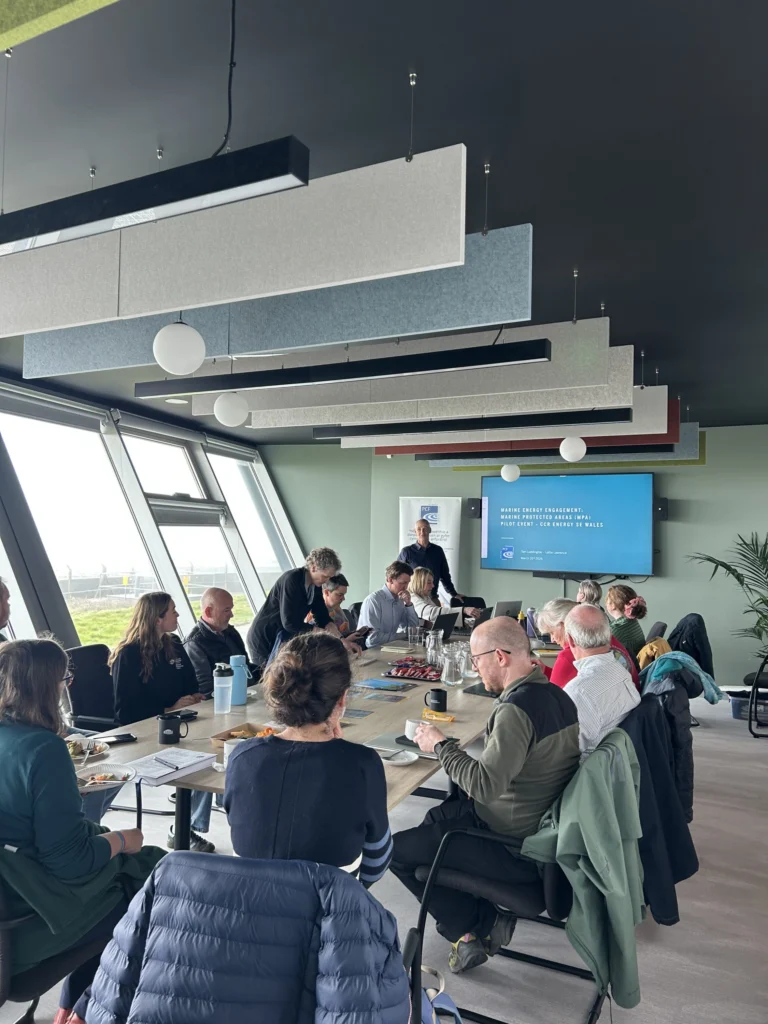
Bringing Stakeholders Together at Aberthaw – Southeast Wales
Our final event brought together a targeted group of stakeholders at Aberthaw to explore future marine energy development in the Severn Estuary. This session focused on collaboration, combining presentations with interactive activities such as visioning exercises and stakeholder mapping. Rather than building basic awareness, the goal was to support shared understanding and long-term thinking.
What worked well:
- Structured discussions helped surface shared priorities
- Interactive exercises encouraged collaboration and idea-sharing
- Bringing the right people together strengthened relationships and future dialogue
Key takeaway:
For audiences already familiar with the topic, engagement is less about information-sharing and more about collaboration, discussion and building long-term partnerships.
Final reflections
This project produced both an Engagement Plan and a Delivery Plan that provide flexible frameworks to support more informed, inclusive and effective engagement as marine energy continues to evolve. Rather than prescribing a one-size-fits-all approach, they recognise that engagement needs differ by place, audience and context. The learning from this work highlights the importance of early, place-based and two-way engagement, supported by clear, accessible communication that sits between technical detail and high-level messaging. It also reinforces the value of taking engagement directly to people, meeting them where they are, rather than expecting them to engage through formal or centralised routes. Ultimately, this project demonstrates how coordinated, neutral engagement can play a vital role in supporting positive coexistence between marine renewable energy and nature, helping communities and stakeholders navigate change with greater confidence.
The next phase of the Marine Energy Engagement Plan, funded by The Crown Estate, will build on this work, continuing to engage with communities and improve understanding around marine renewable energy across Wales.