
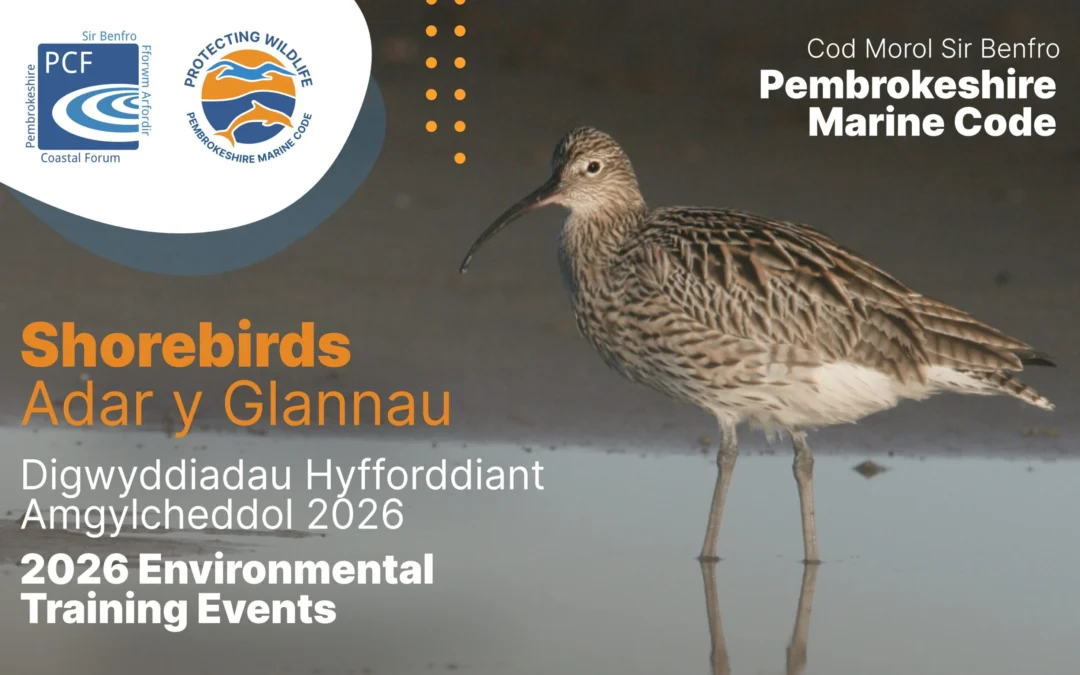
In late February, Pembrokeshire Coastal Forum (PCF) hosted the first Pembrokeshire Marine Code environmental training mini-series of 2026, focused on shoreline birds. The series brought people together online and out on the coast to build practical knowledge of wading birds, why they depend on Pembrokeshire’s estuaries, and how everyday choices by coastal users can reduce disturbance.
The three events were:
- Shorebirds Webinar (Monday 23 February, online)
- Shorebirds Newport (Wednesday 25 February, Newport Estuary)
- Shorebirds The Gann (Thursday 26 February, The Gann at Dale)
The webinar was hosted by Alec Denny and Joe Monks (PCF). Guest speakers were Chris Taylor (Ranger Team Leader, Pembrokeshire Coast National Park), Toby Phelps (ecological consultant), and Paddy Jenks (Aderyn Ecology).
Why Pembrokeshire mud matters far beyond Pembrokeshire
Chris Taylor opened the speaker line-up with a clear message: when we talk about shoreline birds, we also need to talk about mud.
Wading birds, wildfowl and other wetland birds are drawn to the same places for the same reason. Mudflats and sheltered inlets hold huge amounts of life, even when they look quiet at first glance. In still water, organic material settles and builds up, creating rich feeding areas with lots of micro-habitats, shifting oxygen levels, and a wide range of invertebrates. That variety supports the birds that overwinter here, pass through on migration, or rely on estuaries as predictable “stop-off” points.
Chris also set Pembrokeshire’s sites in a wider network, pointing to how estuaries such as the Cleddau, Newport, and the Gann sit within international migration routes. Many birds arrive from Iceland, Scandinavia and further afield to winter in the UK because conditions are comparatively mild, and because these sheltered, nutrient-rich feeding areas exist.
In practical terms, mudflats do more than feed birds. Chris highlighted the wider value of estuaries too, including water purification, support for fisheries, and buffering wave energy as part of natural coastal defence.
Food, tides, and timing
Chris’s talk also helped explain why timing and behaviour matter so much in winter.
Mud provides a menu. There are shellfish such as cockles, worms such as ragworm and lugworm, and grazing opportunities where saltmarsh and eelgrass develop. Many of these prey species become more active around tidal changes, and birds often respond by feeding more intensively as conditions shift.
This matters because waders have limited options. When the tide covers feeding areas, those birds cannot simply switch to another habitat nearby. They need access to specific patches at specific states of tide, and they need enough uninterrupted time to feed and rest.
Understanding the birds you are seeing
Across the webinar, Toby Phelps supported that ecological picture with practical guidance on recognising waders in the field. He talked through key features, comparisons between similar species, and the value of calls when birds are distant or partly hidden by the tide line.
That focus on identification was not about ticking lists. It helped people notice what’s present, where birds choose to feed and roost, and how quickly behaviour changes when disturbance occurs.
What it’s like to be a wader
Paddy Jenks built on these themes by bringing the group into the lived reality of a wading bird.
He described how waders are built for long-distance movement and specialised feeding, and how those adaptations come with high energy demands. Migration, moulting and breeding require birds to be in good condition. In winter, survival depends on efficient feeding and energy-saving behaviour between feeding bouts, including roosting. When birds flush repeatedly, they spend energy they cannot easily replace, and may be pushed away from the best feeding areas at the times they most need them.
Paddy also shared observations from local monitoring work, including how colour-ringing helps track individuals and reveals how closely Pembrokeshire connects to wider migration routes.
Disturbance and the Marine Code
A thread running through all the talks was the same practical point: disturbance is often visible once you know what to look for.
Chris explained behavioural cues that can indicate disturbance, including birds stopping feeding, becoming more alert, calling more frequently, and preparing to take flight. These signs are useful for anyone spending time on the shore, whether you’re out walking, watching wildlife, or leading activities.
The Pembrokeshire Marine Code’s guidance on wading birds supports simple, proven actions:
- give birds plenty of space
- avoid approaching flocks, especially at roost
- keep dogs under close control
- watch for signs that birds are becoming unsettled, then increase distance
- plan visits with the tide in mind, especially in winter
The series also referenced local mapping and guidance that helps people plan around sensitive areas.
Why the Marine Code Matters
Pembrokeshire’s coast is valued for its wildlife, landscapes and the experiences it offers, from quiet walks to water sports. It is also one of the most protected areas in the UK, with multiple environmental and cultural designations.
As Alec highlighted in the webinar introduction, PCF exists to bring people together around coastal challenges, and the Marine Code sits within our work to promote responsible recreation. The Marine Code supports a simple idea: small changes in behaviour can make a real difference for wildlife, especially in places where people and nature share the same narrow strip of coast.
From webinar to the shoreline: Newport and The Gann
The two field sessions carried the learning into real settings.
Newport Estuary (Wednesday 25 February)
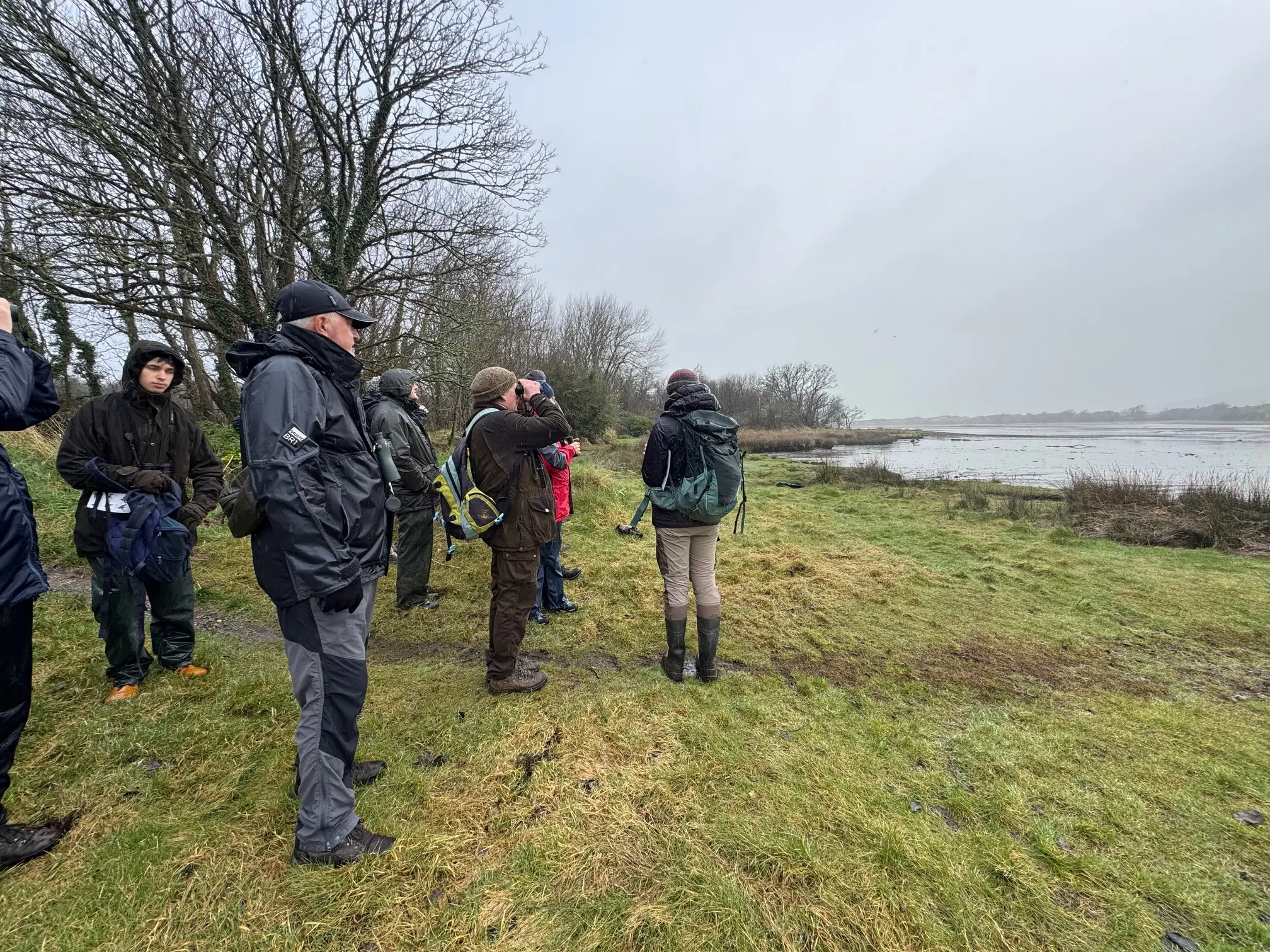
At Newport, participants had time to put identification and disturbance awareness into practice. The estuary setting made it easy to see how birds use different zones at different tide states, and how much of their day is shaped by a few key feeding windows. It was also a good chance to talk through what responsible access looks like on working shorelines where paths, water access points and feeding areas sit close together.
The Gann, Dale (Thursday 26 February)
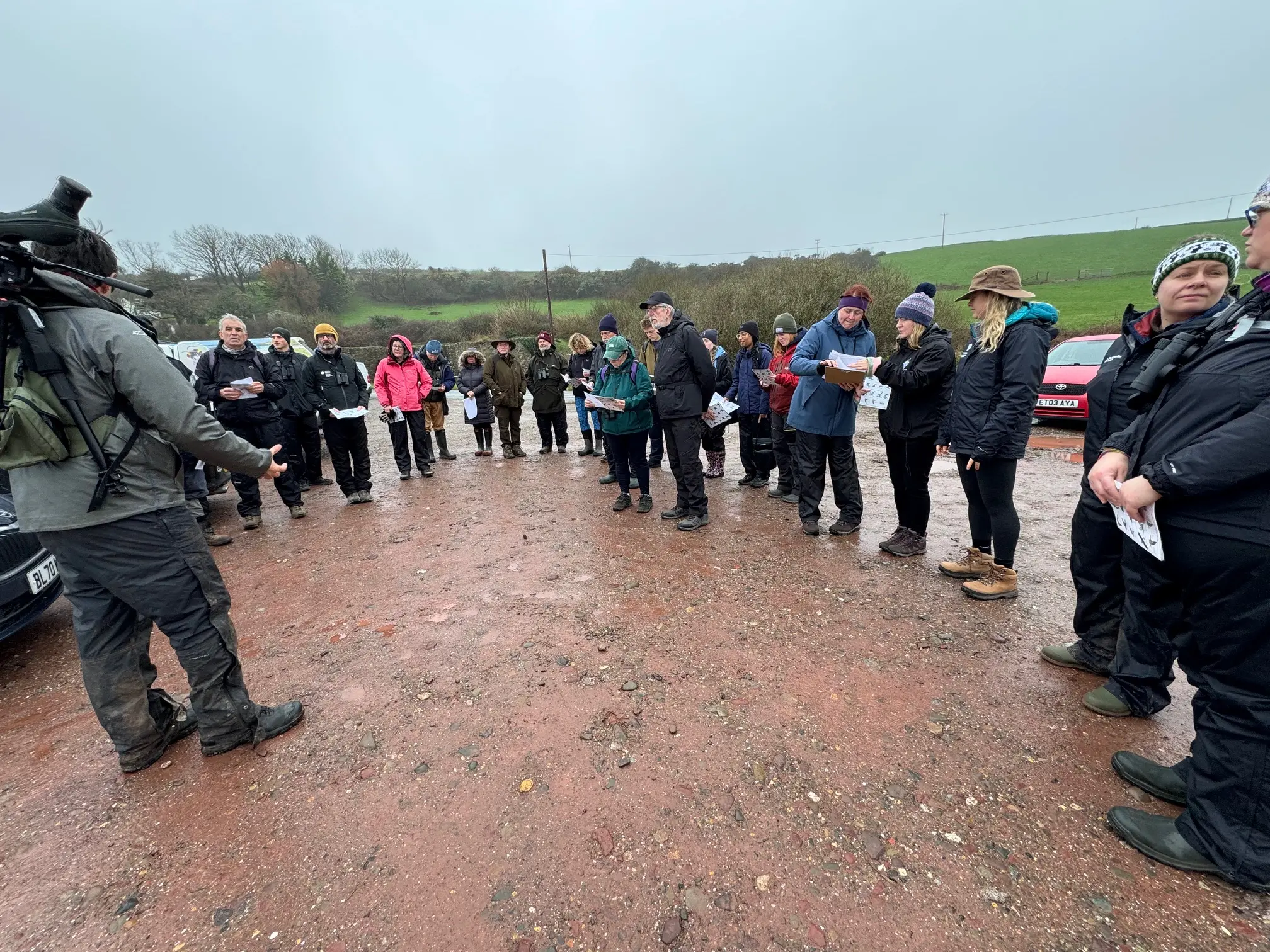
At The Gann, the group explored another important wader site with its own patterns of feeding and roosting. The day reinforced the link between behaviour on the shore and outcomes for birds, particularly around giving space, keeping movement predictable, and avoiding putting birds to flight. It also connected well to the webinar’s wider themes about migration, energy, and the importance of these habitats in the bigger picture.
A simple tool to support better choices
The series also highlighted the Wales Coast Explorer App as a practical tool to help people identify wildlife, understand sensitive areas, and report sightings responsibly. Used alongside local guidance, it can support better planning and fewer accidental disturbances.
Thank you, and what’s next
Thank you to everyone who joined the webinar and the field sessions, and to all speakers and hosts for sharing their knowledge and experience. This mini-series was designed to turn information into confident, practical action, so that more people can enjoy Pembrokeshire’s coast while helping protect the birds that depend on it.
Keep an eye out for more Pembrokeshire Marine Code environmental training events through 2026.